Team Culture Design
Co-designing the mission, values, and practices of a new internal venture team
When JPMorgan Chase formed a new business ventures team, I was brought in to co-design the foundations it would operate from — not just the org chart, but the mission that gave it direction, the values that shaped its culture, and the practices that made those values real in everyday work.
01 — Diverge
Team brainstorms on sticky notes
Culture Doesn't Happen to You
New teams inside large organizations face an invisible pressure: absorb the surrounding culture or fight it. Most don't do either consciously — culture just accumulates, shaped by the loudest voices, the earliest habits, and whatever the institution happens to reinforce. The New Business Ventures team had a rare opening. We were early enough that the team's identity hadn't calcified yet. That window doesn't stay open long.
My role was to design the process: to take a scrappy, high-ambiguity team and help them articulate who they wanted to be before the pressure of delivery forced that question on them. This wasn't a values offsite or a brand exercise. It was applied design thinking — run on the team itself.
The Approach
Culture has three dimensions — a framework I developed through my work on human-centered culture design. Shapes are what culture looks like: invisible elements like values and norms, and the visible behaviors, rituals, and stories that carry them. Workings are how culture functions: the feedback loops between visible and invisible that either reinforce healthy patterns or compound unhealthy ones. Goals are why it matters — the performance, collaboration, and well-being outcomes the design is in service of.
Most culture work intervenes at the Shapes level (write a values statement) without thinking about the Workings (what reinforces or undermines it in daily practice) or the Goals (what behavior change actually needs to happen). This project was designed to address all three.
The Design Process
I structured the work in three phases. First, we diverged widely — surfacing what people actually believed about how great teams operate, and where they felt let down by typical team dynamics. Then we clustered and voted, using dot-voting to find the ideas with real gravitational pull rather than whoever spoke loudest. Finally, we wrote: turning rough themes into specific, accountability-able statements — language the team could actually use when a decision gets hard.
Mission and Vision
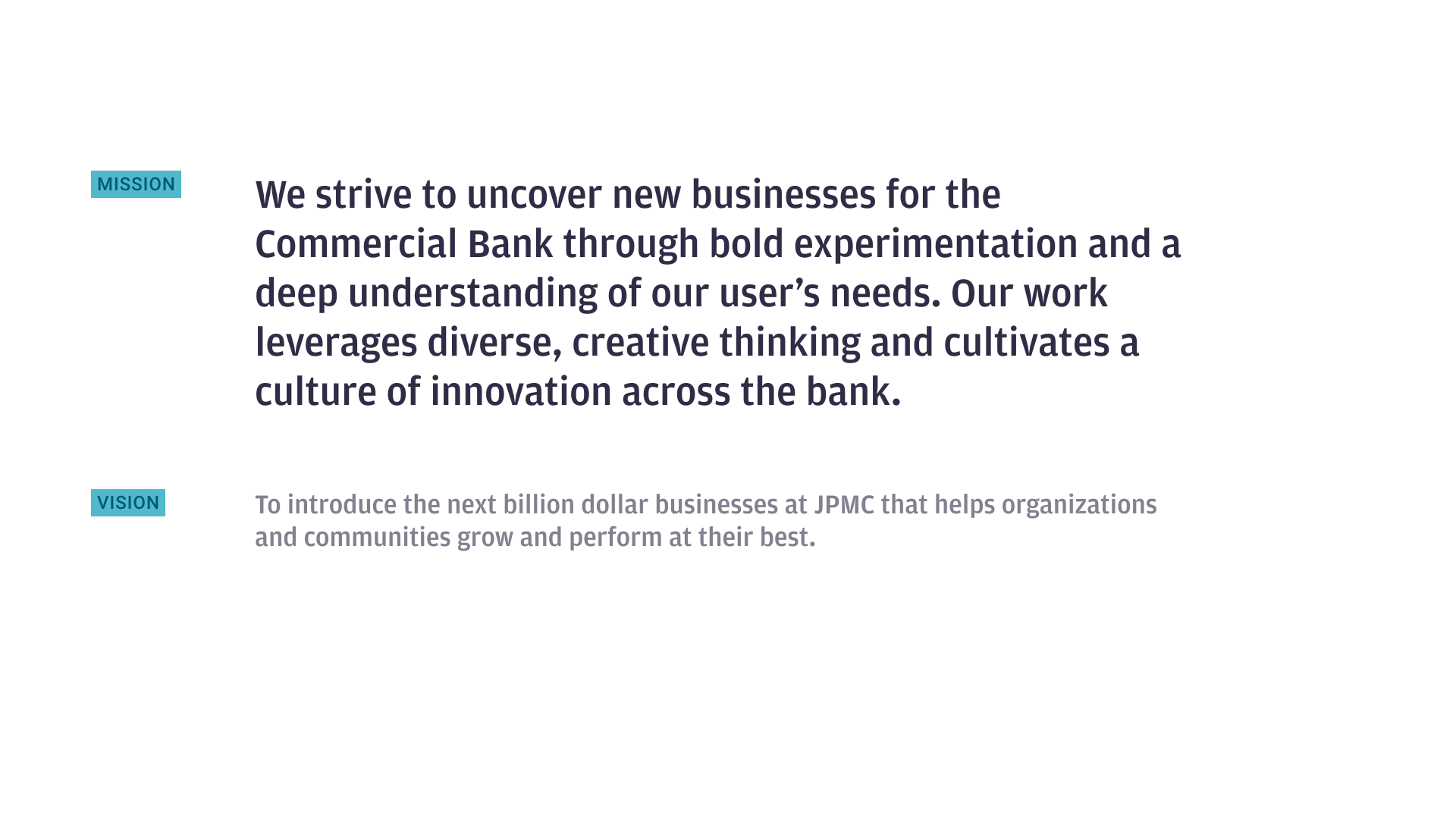
The mission and vision were drafted collaboratively with the leadership team anchoring the process. What emerged was direct and specific to NBV's mandate — not inherited from a parent organization, not aspirational boilerplate. Something the team actually wrote and, by writing, owned.
Six Values, Six Commitments
The six values that emerged from the workshop aren't a list of virtues — they're a set of stances the team agreed to take. Each one was chosen because it represents a real tension the team expects to face. Each pairs a short, memorable tagline with concrete practice examples so it doesn't stay abstract.
Values That Show Up in Behavior
Statements on a page don't change how a team operates. Practices do. The final phase translated values into rituals — recurring structures that make the culture visible and repeatable. Three stood out: Creative Moment of the Week, which creates space for non-work creative sharing and signals the team values the whole person. A Learning ritual that turns experience into shared knowledge rather than letting it evaporate. And Stars Around My Scars — the most vulnerable of the three — where team members name something that didn't go well and what they took from it.
Practices Reset
Rituals have a shelf life. What felt meaningful at launch can calcify into obligation. Several months in, we ran a practices reset — auditing what was still working, what had faded, and what the team wished they'd built differently. Some practices evolved. Some were retired. The reset itself became a ritual: a signal that the team's culture is something they actively tend, not something that was handed to them once.
Design Thinking Works on Organizations Too
The same moves that produce good product design — diverge broadly, cluster for signal, prototype and iterate — work on organizational behavior. Culture is just another design problem. The difference is that the users are also the designers, which changes the nature of the facilitation required.
Specificity Is the Difference Between Values and Platitudes
Generic values don't change behavior because they don't create accountability. A value that names the specific tension it's resolving — and pairs with a practice that makes it visible — is something a team can actually point to when a decision gets hard.
The Process Is Inseparable from the Outcome
A culture deck that leadership hands down is a directive. A culture deck the team built together is a mirror. The co-creation process isn't just a means to the artifact — it's what gives the artifact weight. When the team debates a value statement, they're already practicing the culture they're designing.